Cosy Computing
On the soulful qualities of home computers.
Autumn 2024
There's been some recent discussion online about what makes retro computers a popular pastime. Some suggestions touch on the metaphysical, alluding to nostalgia and other bittersweet emotions: Perhaps it's about revisiting childhood memories, or maybe about finally living the dream of having a fully kitted out SAM Coupé with two floppy drives and silly amounts of RAM.
Other explanations are more specific: Home computers are less complex and thus easier to understand. They're distraction free, unburdened by desktop notifications and Youtube rabbit holes. They're made with the user in mind, not for feeding the data harvesting advertisement economy. Their hardware limitations spur creativity and imagination. Applications didn't change their UI on a monthly basis, letting the user truly master the ins and outs of their tools. It's about calm, familiarity and tinkering for fun. And, of course, chicks dig it.
I believe all of this to be true, but a crucial factor is often missing from the discussion: home computers were - and are - cosy, often in a very tangible way.

The life of many a retro enthusiast: an eclectic mix of old and new.
Modern Times
Modern computers are sleek, flat and utilitarian. Everything about them is slimline, one-USB-fits-all, short key travel, lightweight, brushed metal, on-screen monitor menus and unyielding touch surfaces. Professional. Orderly. Sterile. The sounds they make are mostly limited to angry fan bursts, ear-piercing coil whine or angst-inducing chat notification jingles.
Home computers were often bulky, perhaps even a little clumsy - but endearingly so. They didn't have annoying fans, glossy flatscreen glare or wireless input devices constantly in need of a recharge. Instead they provided happy little mechanical sounds and a tactile experience that was homely and welcoming. Although modern computing can be fun and rewarding, I very rarely find it to be cosy: Modern machines simply lack the prerequisites for creating a certain electro-mechanical ambiance.
The Sounds of Science
I pity those who've never experienced the excitement of flipping through a collection of floppy disks, and the ensuing - and profoundly satisfying - Klonk when the drive mechanism accepts the selected disk. I wish for everyone to, at some point, feel the sublime give and then resistance of a CRT's power button, and hear the accompanying Thunk! and Biew! when turning the screen on and off, respectively. It all just feels so right. Photos, videos or even software emulation is incapable of recreating this. Neither can it fully convey the warm glow of an electron beam sweeping across phosphor on glass.
I'd like to show contemporary designers the immediacy and intuitiveness of mechanical volume, brightness and contrast knobs. And there's something about the specific weight and - yes - sound of an opto-mechanical ball mouse. The whirring hum of a tape drive, the zippy buzz of a mechanical hard drive, tightening the jackscrews on a DB-25 connector - all simple pleasures lost in time, like Atari games in a landfill. Heck, these days most of us aren't even treated to the subtle Click of plugging in an 8P8C Ethernet connector.
Contemporary computing just isn't very cosy: our modern machines feel too much like the anonymous, minimalist interior of a business hotel. Small wonder, then, that we yearn for the soulful log cabins of yore.
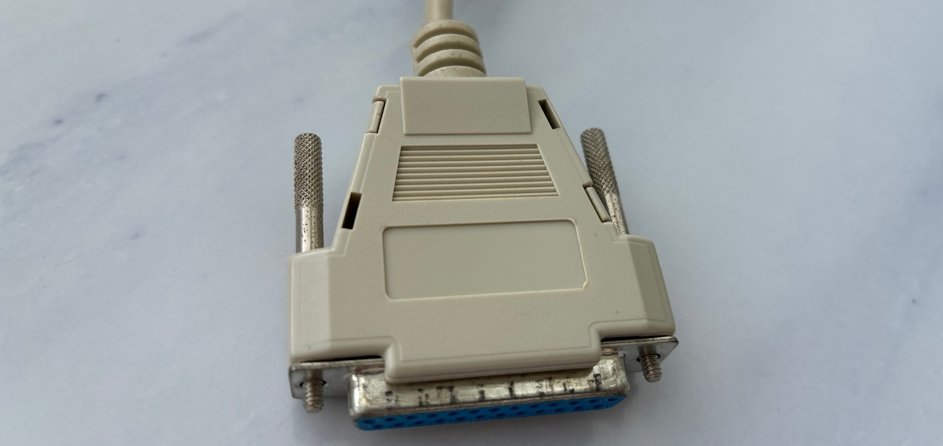
You just know that one's going to stay in the computer no matter what.
Cosy Computing
Emulators may have their place among retro enthusiasts, but the cosiness of wedge-shaped consumer electronics can never be fully experienced that way. The difference is akin to that of sitting around a crackling campfire, compared to watching a recording of one in 4K Ultra-HD on the latest flatscreen TV.
Cosy computing is about the hands-on usage of old home computers, because only old home computers are capable of the multi-sensory experience required for putting the human body and mind into a sufficiently leisurely state of computational relaxation. It's specific hardware and software inducing a particular state of mind, without looming production deadlines, attention-grabbing dark patterns or sudden forced system updates. Working hard with old computers is its own special kind of fun, but cosy computing is mostly about consumption. It's about thoughtfully browsing through a box of floppy disks, calmly sipping on a beverage meant for grown-ups while treating yourself to a choice selection of chocolate pralines. It's about letting the mind rest for a moment, in order to gather energy and inspiration.
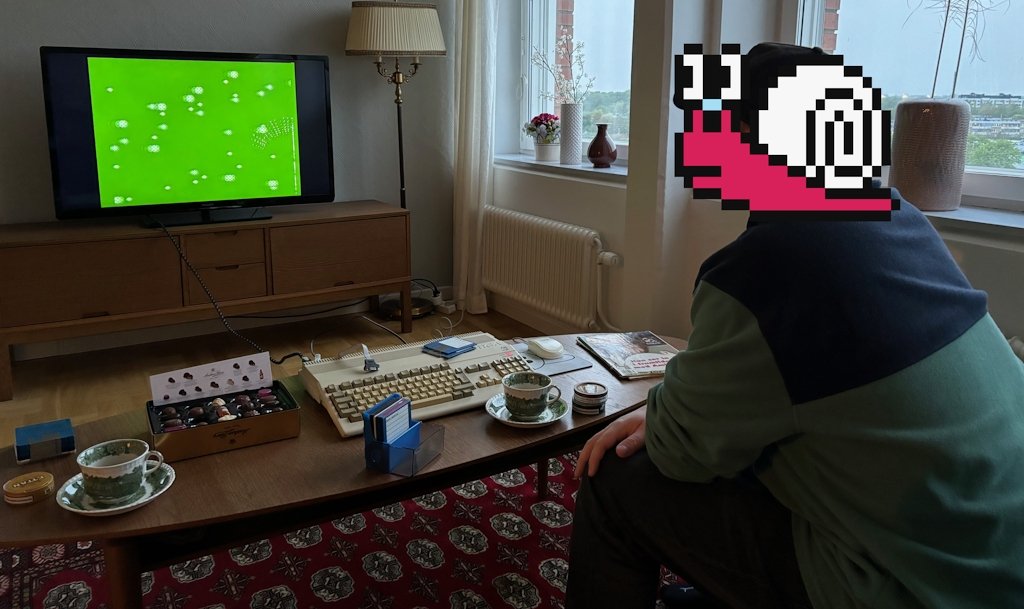
Cosy Software
Cosy computing, while fun on one's own, is best enjoyed in the company of like-minded friends. But when the crew is gathered and the scent of warm plastic is finally mingling with those of fresh coffee and brandied plums, what disks should be plonked into the drive?
To start things off, there's nothing quite like botanising among the unknown yet familiar. While examining utility disks can be great fun, they're meant for making things. Instead, why not indulge for a while in their sibling, the packdisk?
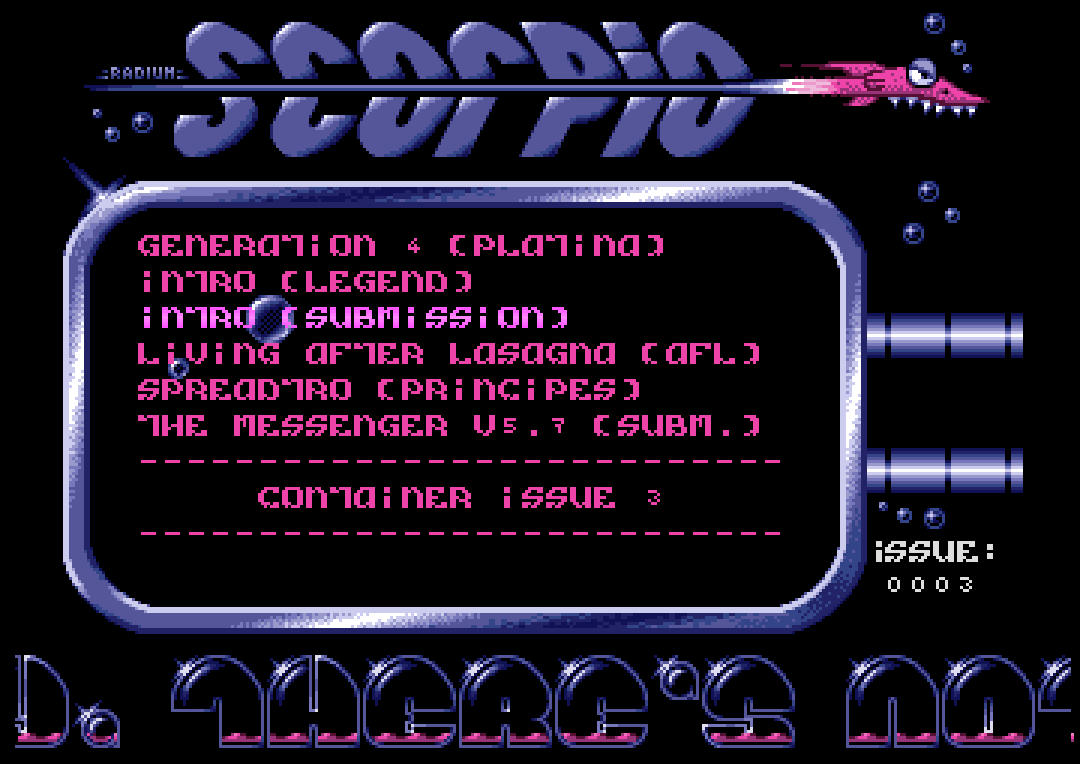
A typical packdisk menu.
Filled with the latest selection of demoscene goodies - demos, images, music, intros - at their time of release, packdisks offer an unprecedented opportunity to lean back and let a soothing river of pixels and beeps wash across the senses. These collections of demoscene antics may have had their golden age during the heyday of the Amiga 500, but have been seeing a resurgence of late with series such as TEK's Crap Box and Artstate's Party Pack.
Just like with utility disks, packdisk menus range from the plain to the fantastical - as does their contents. Despite this mix of high and low, they're rarely disappointing. The Amiga scene was (and is) a bustling, productive and communicative one. It's not hard to find something you've either forgotten or never seen before. At the very least, expect to get a few chuckles from the sincerity and passion that can be conveyed only in a scrolltext written by a geeky teenager some time during 1988.
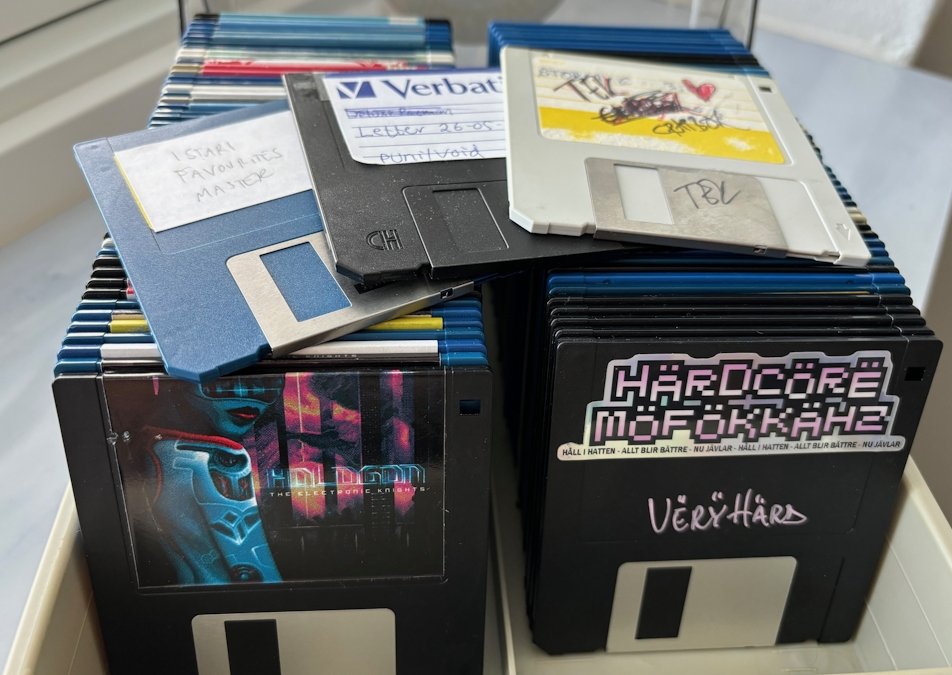
The anticipation and tactile sensation of flipping through floppies beats browsing a USB stick any time of the day. Typical packdisks on top.
Browse by year, by scene group or by packdisk series - no matter your preference, entertainment is bound to ensue. But keep in mind that cosy computing can, at times, come with slightly edgy surprises. It remains an activity exclusively for discerning adults, suitably equipped to navigate the media landscape of decades past. Those were, after all, times when political correctness had yet to be invented, and the raging hormones of young men with video digitizers clashed with the forbidden world of risqué Samantha Fox depictions.
Cosy Gaming
Leisurely demo consumption is all good and well, and may oftentimes be enough to fill the better part of an evening with exciting discoveries. Few of us can withstand styling ourselves as connoisseur demo critics, discussing the finer points of glenz vectors and colour-cycling plasma. But there are times when man must be pitted against man and strength measured through combat. In a computer game, of course - we're still in the realm of cosy computing.
For cosy evenings alone, when there's no need for honour in fighting, cheats are allowed. Why not build your dream town in Sim City, with an abundance of cash? Maybe load up a trained version of Silkworm, and get all the way to the end boss at long last? Or, perhaps, immerse yourself in the storytelling of a moderately easy point-and-click adventure such as Hook - an actually decent movie license from Ocean - or the similarly relaxing Flight of the Amazon Queen.
With friends around, however, nothing beats simple player-versus-player fun. Lose yourselves in the frantic split-screen action of Lotus Esprit Turbo Challenge or, my favourite two-player puzzler, Super Foul Egg. Other options include blowing one another up in Scorched Tanks and Worms, or perhaps hosting a tournament in Pinball Dreams. I'm barely scratching the surface, of course, but casual and cosy is key.
Midnight Oil
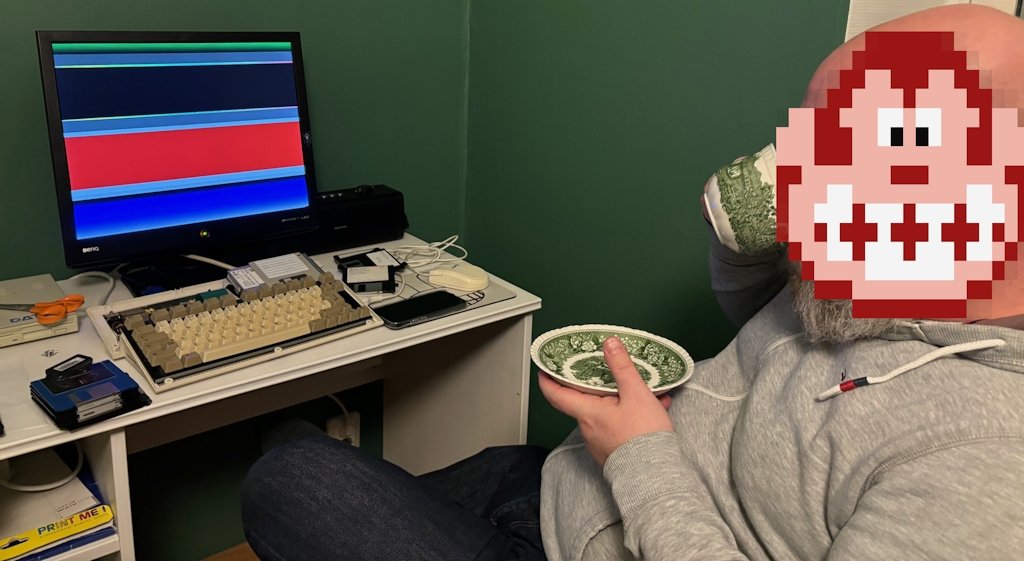
As evening turns into night, cosy computing may change gears. Fuelled by kaleidoscopic demo effects, soothing tracker music and the klonks, whirrs and creak-beeeoouuwws of tactile old hardware, cosy computerists might feel both inspired and empowered. Screwdrivers or text editors are brought forth, along with soldering irons, paint programs, sound samplers and pristine, empty floppy disks. While not strictly relaxed enough to qualify as proper cosy computing, the atmosphere is still one of good cheer and camaraderie. Skills other than those needed for gaming are now in employ, and the familiarity of a cosy computer proves crucial: It's a tool that has shaped the hand of the craftsman even more than the craftsman has shaped the tool.
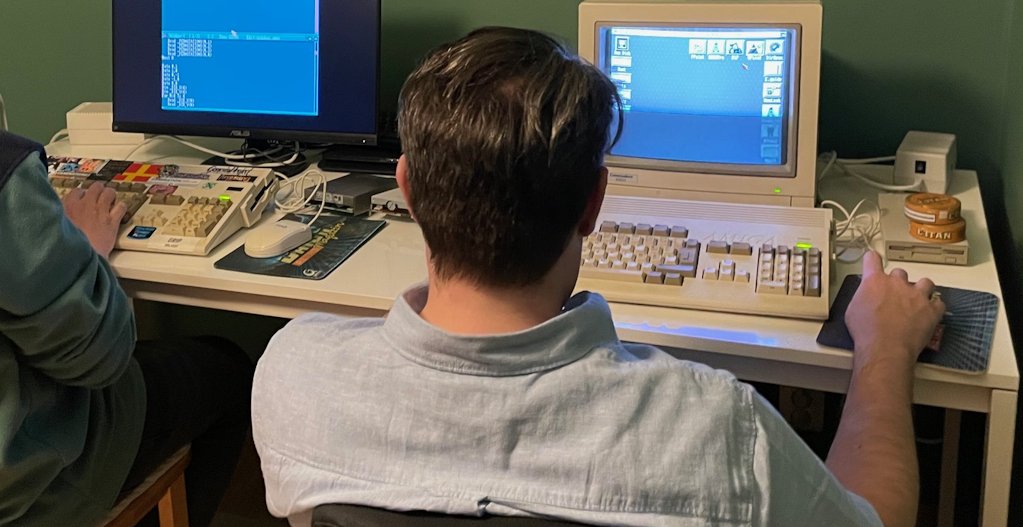
Nobody is talking about "monetizing side projects", "keeping up with the latest framework" or "deploying to a Kubernetes cluster". Everyone is going with the flow, working in their own pace without having to care about stakeholders, feature requests or maintainability. All the while, floppy drives are churning merrily and thick old monitors flicker with a fairytale glow. The campfire analogy suddenly feels very close to reality.
With any luck, these endeavours will lead to something that someone else, somewhere else, can enjoy during their own excursions into the world of cosy computing. In any case, a good amount of fun is sure to be had.